
Analytical Equipment
A variety of instruments are available for research projects and materials characterization
Rates of use for the equipment can be found on our rates table. For questions or to schedule instrument time, please email CrusCenterTeam@utah.edu. If you can't find the tools you're looking for here, feel free to check out our sister lab at mcl.mse.utah.edu.
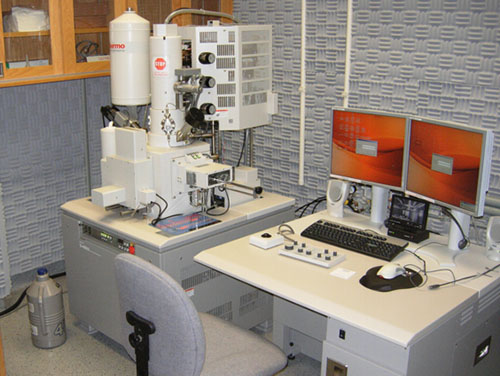
HITACHI S-4800 HIGH RESOLUTION FIELD EMISSION SCANNING ELECTRON MICROSCOPE
- Ultra-high resolution of 1.0 nm at 15kV & 2.0 nm at 1kV
- 30x to 800,000x magnification
- Backscattered electron image resolution of 3.0 nm (at 15kV YAG detector)
- Advanced dry vacuum system design including turbo molecular pump
- Cold field emission electron source
- Fully automated pneumatic valve control
Resources
S-4800 Training Video - Log in with your UID to view
**Ferromagnetic samples interact forcefully with the magnetic field of the object lens. Pulverized ferromagnetic specimens are not allowed. Solid ferromagnetic samples should be attached firmly to the specimen stub.**
View the manual here.
Maintenance: Flashing log
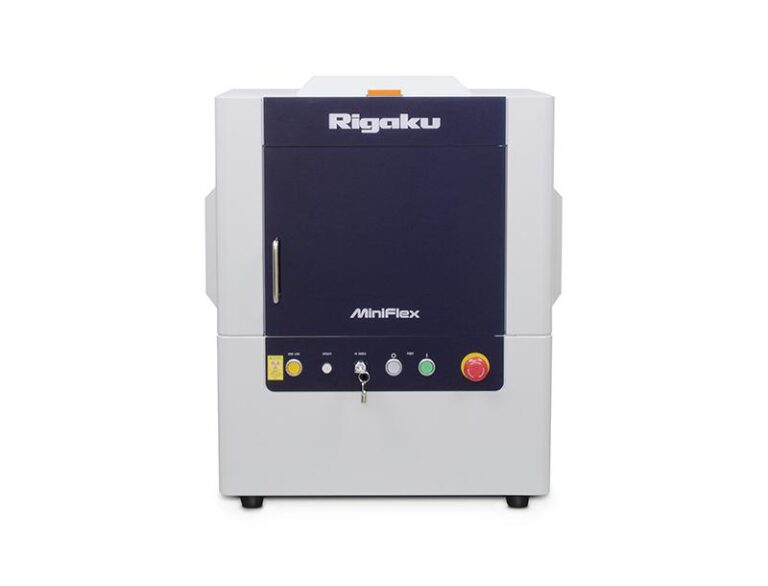
RIGAKU MINIFLEX 600 XRAY DIFFRACTOMETER (XRD)
Qualitative and quantitative phase analysis of polycrystalline materials:
- Powder diffraction
- Rietveld analysis
- High-temperature XRD
- Low-temperature diffraction
- Powder crystallography
Resources
XRD Training Video
Click here and log in with your UID to view
TA INSTRUMENTS Q600SDT DIFFERENTIAL SCANNING CALORIMATER - THERMOGRAVIMETRIC ANALYZER
- Horizontal balance and furnace with growth compensated dual beam
- Up to 200 mg sample capacity
- Sensitivity up to 0.1 ug
- Temperature range: room temperature up to 1500C
- Heating rate
- to 1000C: 0.1 to 100 C/min
- to 1500C: 0.1 to 25 C/min
- Furnace cooling via forced air; 1500C to 50 C in less than 30 minutes
- Platinum/ Platinum-Rhodium thermocouples
- Sample pans: 40 uL platinum or 90 uL alumina
Resources
DSC/TGATraining Video
Click here and log in with your UID to view
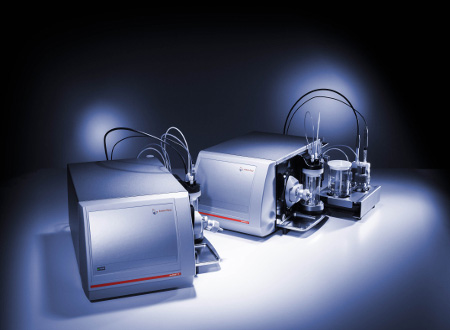
ANTON PAAR SurPASS 3 ELECTROKINETIC ANALYZER
- High-end electrokinetic analyzer for solid surface analysis
- Fully automated zeta potential analysis on macroscopic solids
- Automated detection of the isoelectric point
- Time-dependent recording of liquid-on-solid adsorption kinetics
Resources
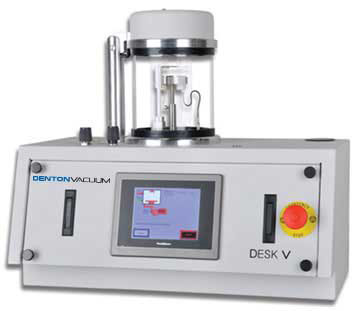
DENTON VACUUM DESK V THIN FILM DESPOSITION SYSTEM
- Easy to use, timed auto sputter coating (0 -100mA)
- Gold target
Please note! Sputter coating your sample(s) is included free of charge if you are imaging your sample(s) using the Crus Center SEM. If you will just be coating your samples but imaging your samples elsewhere, then please refer to our rates table.
We realize some samples will not require a lot of coating time. As such, we have a 15 minute minimum charge.

THERMO SCIENTIFIC NITON XL3T 500 X-RAY FLUORESCENCE (XRF)
Quantitative elemental analysis for quick, nondestructive, material identification or quality control.
- High performance semiconductor detector
- Au anode up to 50 kV and 200 μA
Resources
Required radiation training procedure
View the manual here

AGILENT 5800 ICP OES
- FACT for advanced spectral interference correction
- IntelliQuant for full-spectrum elemental screening
- High sensitivity for a broad range of applications (environmental, geological, metallurgical)
Calibration Standards
Std 1: Al, As, B, Ba, Be, Bi, Ca, Cd, Ce, Co, Cr, Cs, Cu, Dy, Er, Eu, Fe, Ga, Gd, Ho, In, K, La, Li, Lu, Mg, Mn, Na, Nd, Ni, P, Pb, Pr, Rb, Re, Sc, Se, Sm, Sr, Tb, Th, Tl, Tm, U, V, Y, Yb, Zn
Std 2: Ag, Ge, Hf, Mo, Nb, Sb, Si, Sn, Ta, Ti, W, Zr
Std 3: Au, Ir, Os, Pd, Pt, Rh, Ru, Te
Std 4: Ag, Al, As, Be, Ca, Cd, Co, Cr, Cu, Fe, Hg, Li, Mo, Ni, Pb, Sb, Se, Th, Tl, U, Zn
Operating Matrix: 5% trace-metal grade HNO₃

COMING SOON - MLA 650F
Mineral Liberation Analysis, or MLA, is a technique that uses high-throughput EDS data from an SEM and matches those results to a database of minerals. It is an intersection between traditional element-based EDS and phase-focused characterization like XRD. It is best suited for geological and mining applications, but can serve any researcher who deals with minerals. It is currently available on a trial basis. If you'd like your samples to be considered for testing, please reach out to CrusCenterTeam@utah.edu.
(More information about MLA as a technique can be found at https://micro.org.au/techniquefinder/Portal/viewTechnique/149?nav_from=listTechniques)